





Introduction
We often think of cybersecurity breaches as loud explosions—ransomware screens, crashed servers, and leaked databases. But in 2026, the most dangerous threat is silent, invisible, and likely already living on your network. These are Zombie API security risks. Unlike active applications that are monitored and patched, Zombie APIs are the “undead” of your infrastructure: deprecated endpoints, forgotten test versions, and legacy connections that were supposed to be turned off but never were.
Because they are “dead” to your developers, they are not monitored. But to an attacker, they are very much alive. They are open doors with rusted locks, leading straight to your core data. In this guide, we will hunt them down. We will explore the anatomy of these forgotten gateways, distinguish them from their “Shadow” cousins, and provide a technical framework to identify, isolate, and decommission them before they resurrect a data breach.
The Taxonomy of the Invisible: Shadow vs. Zombie
To defeat the enemy, you must name it. In the world of API sprawl, there are two distinct threats that are often confused.
1. Shadow APIs: The “Unknown”
Shadow APIs are active, production-grade APIs that were built outside of formal governance.
- The Scenario: A marketing team needs a quick integration for a new campaign tool. They hire a contractor who spins up an API on a cloud instance without telling the security team.
- The Risk: It is unmanaged, but it is usually running modern code.
2. Zombie APIs: The “Forgotten”
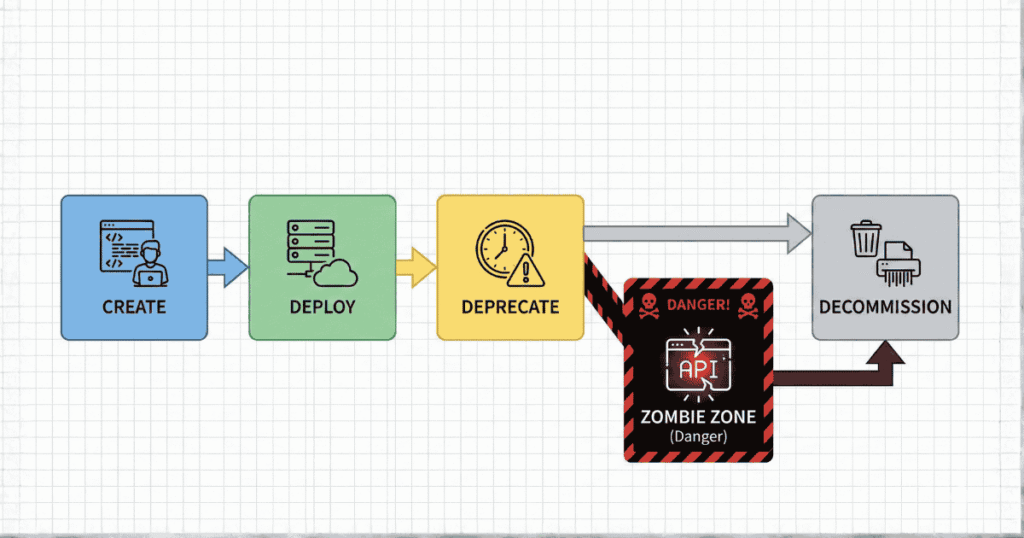
Zombie API security risks are different. These are APIs that were officially created but improperly retired.
- The Scenario: Your team updates
api.company.com/v1/loginto/v2/login. They tell clients to switch to V2. But they forget to actually shut down the V1 server. - The Risk: V1 is now a “Zombie.” It receives no security patches. It likely uses outdated authentication (like Basic Auth instead of OAuth 2.0). And worst of all, because no one is watching the logs, an attacker can brute-force it for months without triggering a single alarm.
Why 2026 is the Year of the Zombie
Why is this trending now? Because of Microservices. In the old days of monolithic architecture, we had one big door. Today, a single application might talk to 50 different microservices. That means 50 different APIs. Multiply that by 5 years of updates, and you have hundreds of “ghost” endpoints floating in your cloud environment.
The “BOLA” Connection
The Open Web Application Security Project (OWASP) lists Broken Object Level Authorization (BOLA) as the #1 API threat. Zombie APIs are the perfect breeding ground for BOLA.
The Compliance Cost of Ignoring Zombie APIs
Beyond the immediate technical threat, Zombie API security risks pose a massive regulatory nightmare. Under frameworks like GDPR and PCI-DSS, organizations are required to maintain an accurate inventory of all data processing activities. A Zombie API that is silently collecting user data violates Article 30 of GDPR because it is an “undocumented processing channel.”
Auditors are catching on. In 2026, we are seeing compliance fines specifically citing Zombie API security risks as a failure of “Data Protection by Design.” If you cannot prove that every endpoint—active or inactive—is secured, you are automatically non-compliant.
- Example: In your modern V2 API, you fixed a bug where User A could read User B’s messages.
- The Exploit: An attacker knows this. Instead of attacking V2 (which is fixed), they simply change the URL request to
/v1/messages. If that Zombie endpoint is still alive, the bug is still there, and the data flows out.
The Hunter’s Guide: How to Find What Doesn’t Exist
You cannot patch what you cannot see. Hunting Zombie API security risks requires a shift from “Passive Monitoring” to “Active Discovery.”
Step 1: Log Analysis & Traffic Patterning
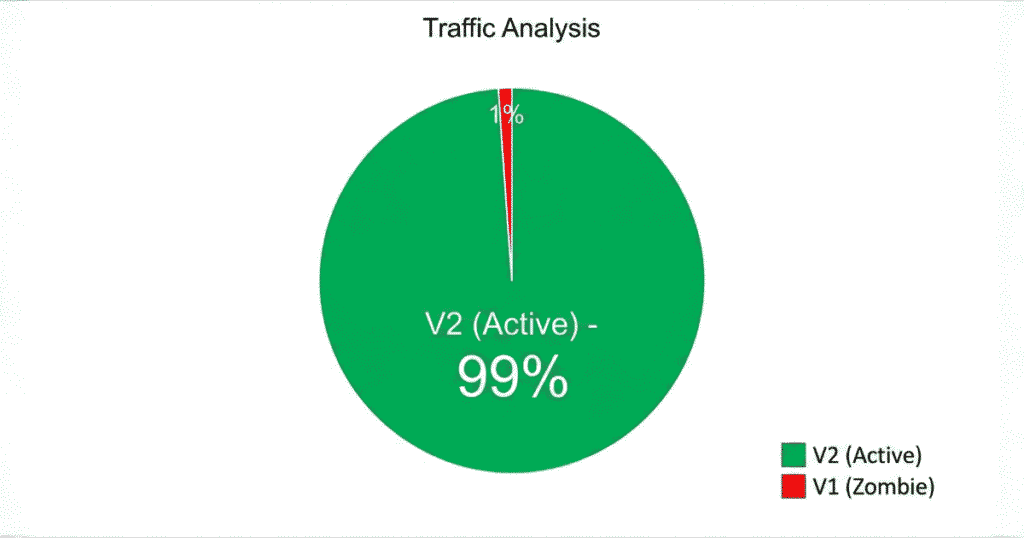
Start with your load balancers and API Gateways (like Kong or Apigee). You are looking for “The Long Tail.”
- The Tactic: Filter traffic by “User-Agent” and “Endpoint.” Look for endpoints that receive very low, sporadic traffic.
- The Red Flag: If you see traffic hitting
/beta-loginor/test-api-2024originating from a single IP address, you have likely found a Zombie being probed by a scanner.
Step 2: Source Code Excavation
Sometimes the documentation is the crime scene.
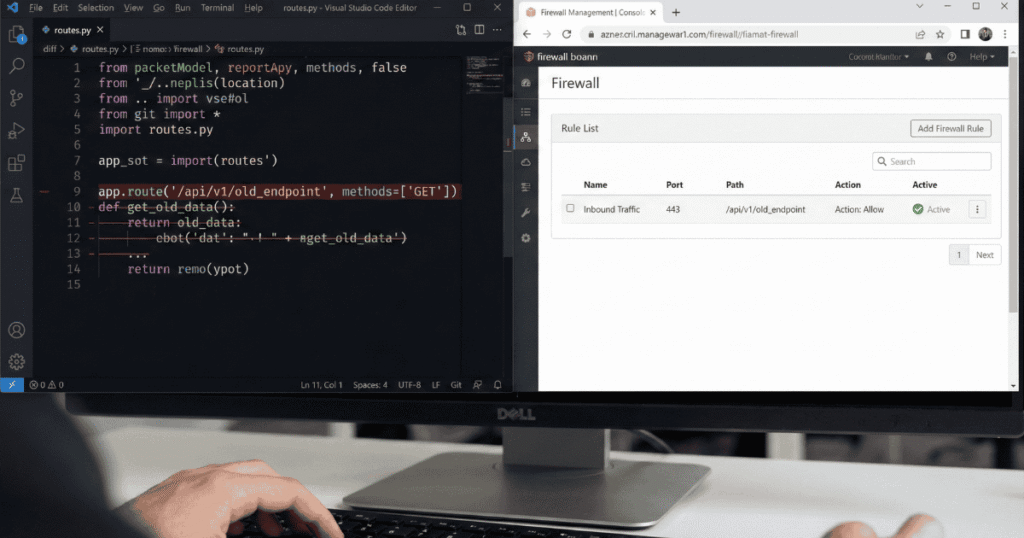
- The Tactic: grep your code repositories for keywords like
deprecated,legacy,v1, ortemp. - The Check: Verify if the routes defined in those old config files are actually blocked at the firewall level. Often, the code was removed from the app, but the route remains open on the server.
Step 3: Infrastructure Scanning
Why Traditional WAFs Miss These Threats
You might be thinking, “Doesn’t my Firewall block this?” The answer is usually no. Most Web Application Firewalls (WAFs) are designed to inspect traffic hitting your known routes. They are not configured to look for Zombie API security risks on routes you forgot existed.
Because a Zombie API often uses valid (albeit old) syntax, the WAF sees it as legitimate traffic. It doesn’t trigger SQL injection signatures or XSS alerts. This “false sense of security” is exactly why Zombie API security risks persist for months—or even years—inside otherwise secure networks.
Decommissioning Strategy: The “Scream Test”
Once you identify potential Zombie API security risks, you cannot just pull the plug. Some legacy client might still be using it for a critical business function. You need a safe “kill chain.”
Phase A: The Brownout
Don’t shut it down. Slow it down. Intentionally add latency (delay) to the suspected Zombie endpoint. If a legitimate user is using it, they will complain (The “Scream”). If no one complains, proceed.
Phase B: The Soft Fail
Configure the endpoint to return a HTTP 410 Gone error message with a custom header: X-Deprecation-Notice: This API is retired. Contact Support. Monitor logs for anyone hitting this error.
Phase C: The Hard Kill
After 30 days of silence, remove the DNS record, close the firewall port, and delete the code. The Zombie API security risks are finally dead.
Tools of the Trade
You don’t need a million-dollar budget to fight this.
- Postman: Great for manually testing if old endpoints still respond. You can create a collection specifically to hunt for Zombie API security risks by re-running old integration tests against current production environments.
- OWASP ZAP: Can be configured to “fuzz” your API, guessing old directory names like
/v0/,/v1/,/backup/. - Wazuh: Use it to ingest Nginx/Apache logs and alert on access to known deprecated paths.
Conclusion: Eternal Vigilance
The scariest thing about Zombie API security risks is that they are self-inflicted wounds. They are not created by hackers; they are created by our own innovation and lack of cleanup. Eliminating Zombie API security risks requires a cultural shift
As we move forward in 2026, our definition of “Done” must change. A feature isn’t “Done” when it is deployed. It is only “Done” when the previous version is completely destroyed. Until then, you are just building a graveyard in your own backyard—and eventually, something is going to crawl out.
Suspect you have ghosts in your network? Check out my guide on oxofel.com/ to see how to scan for them.