


Introduction
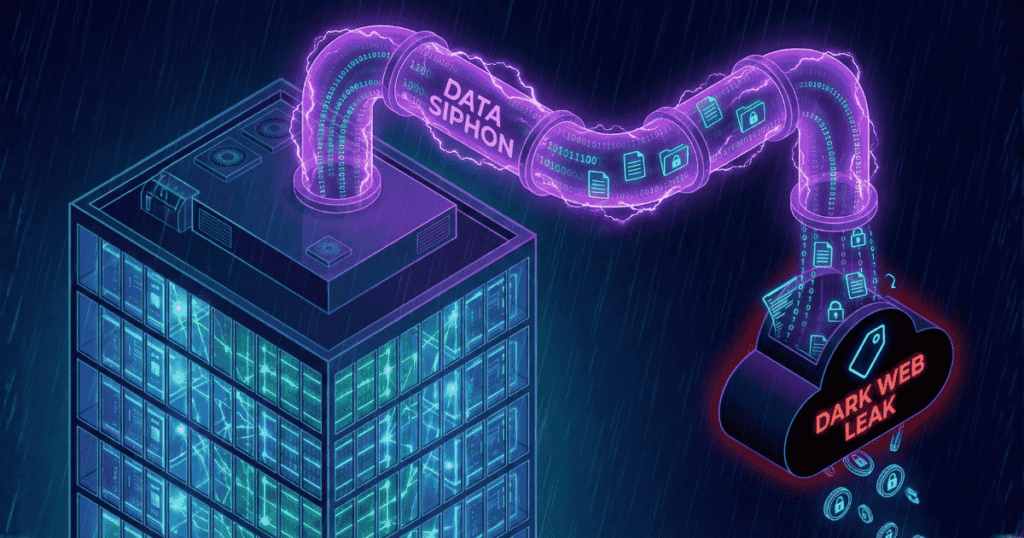
For the past decade, the ransomware nightmare scenario was identical: you arrive at work, open a file, and see a “Red Skull” screen demanding Bitcoin to decrypt your data. In 2026, that era is ending. A silent, more lethal predator has taken its place: Data Theft Extortion.
Attackers have realized a simple economic truth: Encryption is messy. It triggers alarms, it corrupts databases, and worst of all, companies have gotten too good at restoring from backups. So, the adversary evolved. Today, in over 93% of ransomware attacks, the primary goal is not to lock you out, but to sell you out. This shift from “Denial of Access” to “Denial of Privacy” changes everything for defenders.
In this analysis, we explore why encryption-less attacks are becoming the dominant model of 2026 and how you can stop data from leaving your network before the ransom note even arrives.
The Economics of “Encryption-less” Attacks
Why are groups like Snakefly and Cl0p ditching encryption? Speed and silence.
In a traditional attack, the ransomware payload has to touch every file on your hard drive to encrypt it. Data Theft Extortion is noisy. It spikes CPU usage and triggers Endpoint Detection and Response (EDR) alerts immediately.
Data Theft Extortion flips the script. The attacker quietly enters the network, often using stolen credentials rather than software exploits. They spend days slowly copying sensitive HR records, customer databases, and financial projections to a cloud storage bucket. There is no malware to detect. There is no locked screen. You only find out you were hacked when they email you a link to your own private data on the Dark Web.
The Rise of Triple Extortion
If stealing data isn’t enough, attackers in 2026 are using Triple Extortion. This is the new baseline for groups like Qilin and Akira.
- Level 1: They steal the data.
- Level 2: They threaten to publish it (Theft).
- Level 3: They launch a DDoS attack against your website or directly harass your customers and partners to force a quick payment.
The 2026 Threat Landscape: Who is Hunting You?
The “Ransomware-as-a-Service” (RaaS) economy has fragmented. The mega-cartels of the past have broken into smaller, more agile cells.
- Scattered LAPSUS$ Hunters: A collaboration of previous threat groups that focuses purely on extortion-only attacks, often skipping ransomware deployment entirely.
- Qilin (Agenda): Known for extreme scale, utilizing Rust-based tools to exfiltrate terabytes of data in minutes.
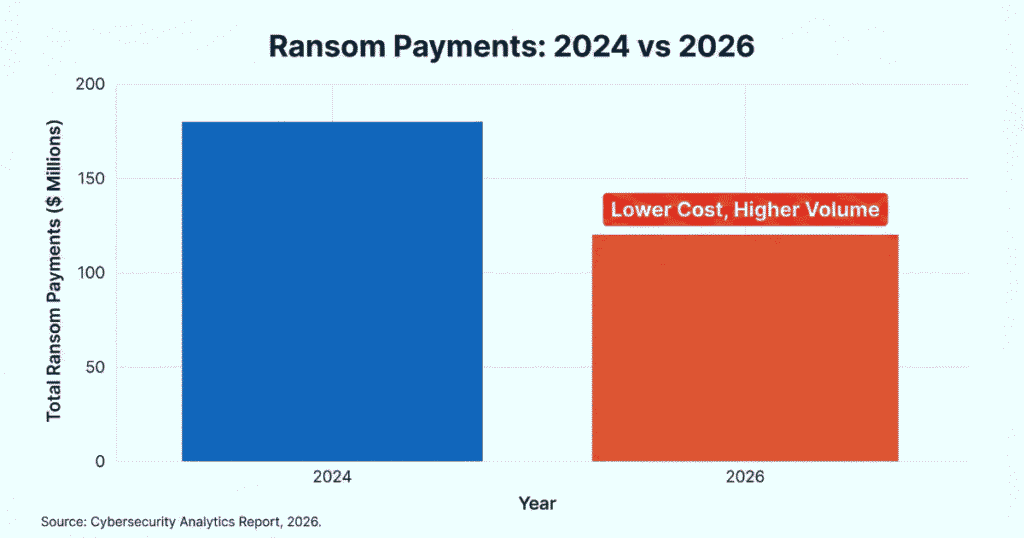
- The “SMB” Target: While median ransom demands have dropped to $1.2 million in 2025, the volume of attacks on Small and Medium Businesses has exploded. Attackers know SMBs lack the 24/7 monitoring required to catch a silent data exfiltration in progress.
How to Defect “Silent” Exfiltration
If there is no encryption to block, how do we stop Data Theft Extortion? We must shift our focus from “Malware Prevention” to “Egress Filtering.”
1. Monitor the “Exit Doors”
Most firewalls are configured to block incoming bad traffic. In 2026, you must block outgoing traffic.
- DNS Filtering: Ensure your servers cannot resolve domains associated with file-sharing sites (e.g., Mega[.]nz, Anonfiles).
- Unusual Uplink Activity: If a marketing intern’s laptop starts uploading 50GB of data to an unknown IP address at 3 AM, that is not a bug—that is a breach.
2. Identity is the New Perimeter
Since many of these attacks use valid credentials, you must look for “Impossible Travel” and behavioral anomalies.
- Implement Phishing-Resistant MFA: Hardware keys (YubiKeys) are the gold standard. SMS-based 2FA is no longer sufficient against 2026-era phishing kits.
- Least Privilege: Why does your HR manager have access to the Engineering code repository? Limit access to only what is strictly necessary.
3. The “Honeytoken” Trap
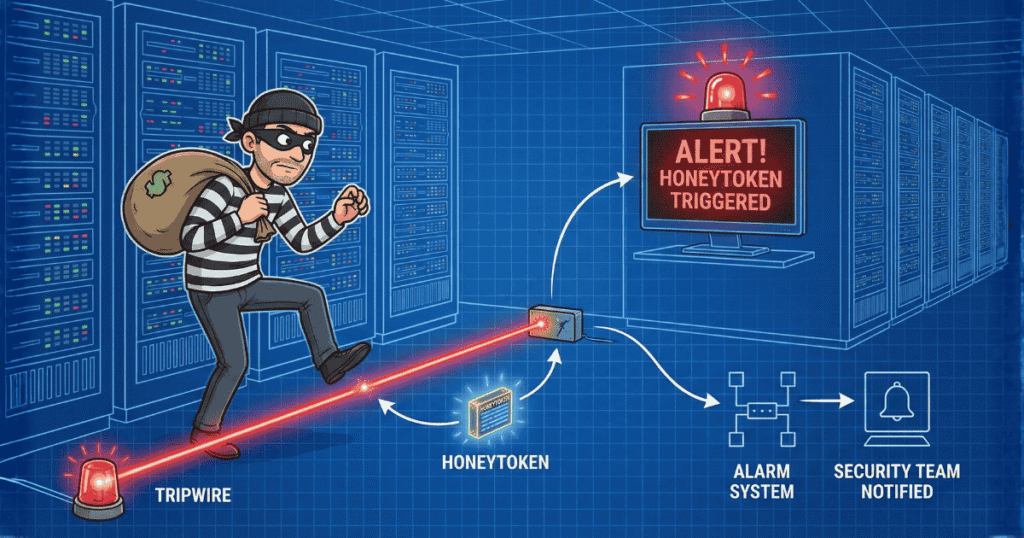
This is my favorite defensive tactic. Place a fake file named passwords.xlsx or customer_database_2026.sql on your network. No legitimate employee will ever touch this Data Theft Extortion. Configure your SIEM (Security Information and Event Management) system to trigger a “Critical Alert” the moment that file is accessed. Data Theft Extortion acts as a tripwire for any attacker snooping around your files.
My Take: The Psychological Warfare
The scariest part of Data Theft Extortion isn’t the technical loss; it’s the psychological pressure. I have seen CISOs break down because attackers started emailing their children or calling their personal cell phones.
This is why “Tabletop Exercises” are critical. You don’t just need to practice restoring backups; you need to practice negotiation. Who talks to the attackers? Do you have a Bitcoin wallet ready? Do you call the FBI? Answering these questions now is better than answering them during a crisis.
Conclusion
The age of the “Red Skull” lock screen is fading. The age of the “Data Leak” is here. Data Theft Extortion is a cleaner, quieter, and more profitable business model for cybercriminals.
To survive Data Theft Extortion in 2026, stop obsessing over whether your antivirus catches every virus. Start obsessing over your data. Know where it is, know who has access to it, and know the second it tries to leave your building.
Concerned about your data egress policies? Check out my upcoming guide on oxofel.com where I show you how to detect exfiltration for free.